The unnecessarily complicated search for some vinyl cleaner.
I was only going to Aldi
This wasn't supposed to be a vinyl expedition.
I was going to Aldi for a quick food shop. That was it. Somewhere on the way, though, I had what seemed like an entirely harmless thought:
I'll stop in Action and see if they've got any vinyl cleaner.
Action, Marché aux Affaires and Noz are all tucked together in a little retail park, and all three specialise in exactly the sort of random assortment that makes you think the thing you're looking for might be hidden on the next shelf.
That was my first mistake.
About three hours later I had been through all four shops, and Aldi, the place I'd actually left home to visit, only accounted for about half an hour of that.
I spent roughly half an hour rummaging around Action, another half an hour in Marché aux Affaires and then somehow managed an hour in Noz. I don't think I've ever spent an hour in Noz in my life.
By that point I'd needed a trolley.
Then I needed two new bags for life to get everything home.
All because I wondered whether Action sold vinyl cleaner.
How difficult can a bottle of liquid be?
The thought behind all of this was fairly simple. I've started picking up plenty of cheap second-hand records, particularly €1–€5 brocante finds, and some of them inevitably need more than a quick brush before I want to put a stylus anywhere near them.
You can, of course, buy little bottles of dedicated vinyl cleaning fluid. But my starting point was considerably less sophisticated: record cleaner is liquid in a spray bottle, surely I can make this stuff myself?
Once you start looking at what's actually involved in cleaning a PVC record, another question appears fairly quickly:
Am I really paying vinyl prices for what is mostly water?
Part of the attraction was avoiding what I'm increasingly discovering is the vinyl tax, put something in a tiny bottle, tell me it's specifically for records and suddenly it seems to cost several times as much.
So I took GPT along for the ride, my ever-present research accomplice in my pocket.
That turned what could have been ten minutes staring blankly at cleaning products into an increasingly ridiculous live investigation. I photographed things, GPT helped me work through what they actually contained, what each ingredient was doing, and, increasingly often, why I should put the bottle back on the shelf.
I went into this knowing that people use isopropyl alcohol in some record-cleaning mixtures.
By the end, I had learned that the word alcohol on the front of a bottle tells you remarkably little about whether you should spray it onto a record.
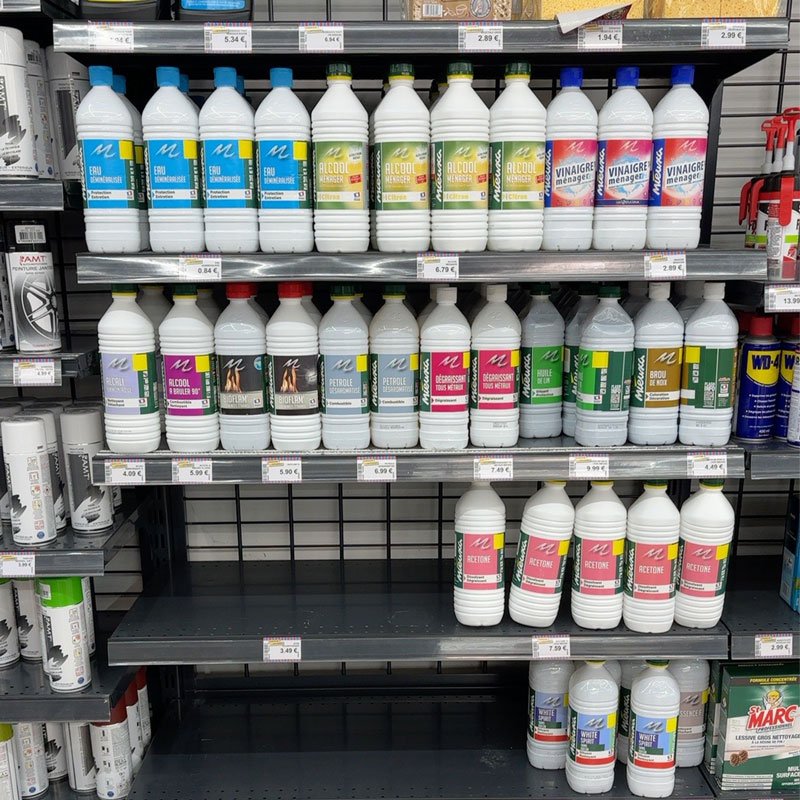
An entire shelf of things that were definitely liquid
This looked promising until I started reading what was actually in the bottles. Household alcohol, methylated spirit, white spirit, acetone and various degreasers all managed to be nearby without becoming sensible substitutes for proper record-cleaning ingredients.
No, not that alcohol
Marché aux Affaires briefly looked like the breakthrough.
There was alcool ménager, alcool à brûler 90°, and bottles of solvents everywhere. Surely one of these was basically the same thing?
Nope.
One particularly promising-looking bottle of household alcohol turned out, on the back label, to contain 56% denatured alcohol along with small amounts of isopropanol, methyl ethyl ketone and denatonium benzoate.
The isopropanol was the bit I wanted.
The rest very much wasn't.
That became one of the useful lessons of the afternoon. A household cleaning product can contain the ingredient you're looking for and still contain other solvents, fragrances, bittering agents or additives that make it a poor choice for something as specific as cleaning record grooves.
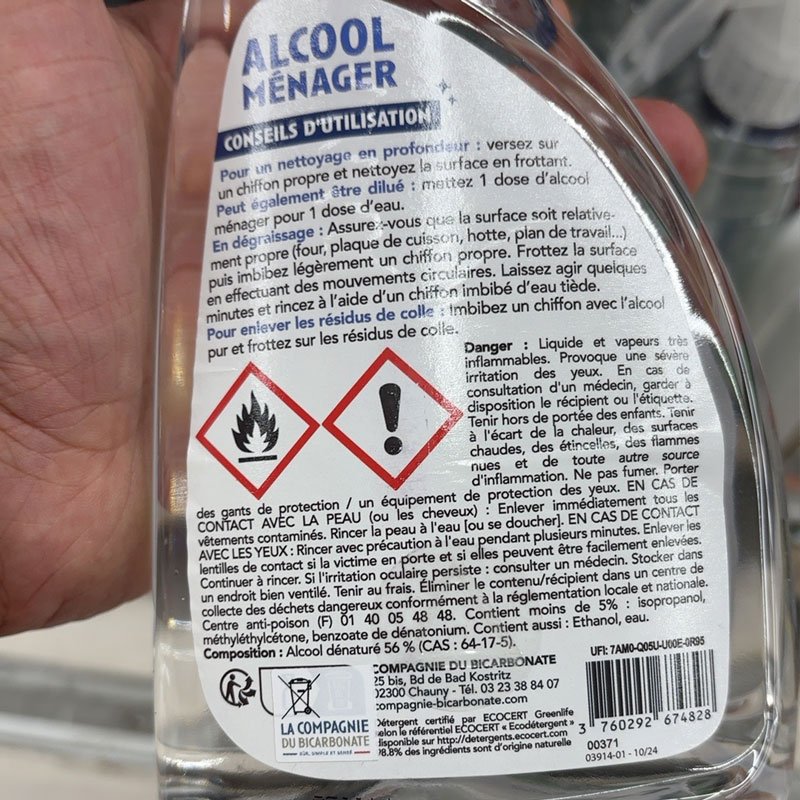
The bottle that nearly qualified
It contained isopropanol, but that wasn't the whole story. Reading the complete ingredients was the difference between finding a useful raw material and putting an unnecessary mixture of chemicals into a record groove.
I also encountered white spirit.
No.
Acetone.
Absolutely fucking not.
White vinegar briefly entered the discussion because I already had some at home, that didn't survive particularly long either. Useful stuff for limescale, but not something I needed to introduce into this particular experiment just because it was available.
The increasingly obvious answer was wonderfully boring: buy proper, plain isopropyl alcohol rather than trying to turn some unrelated household chemical into it.
Apparently I now have opinions about cloths
The chemical investigation was only half of it.
There were cloths.
Lots of cloths.
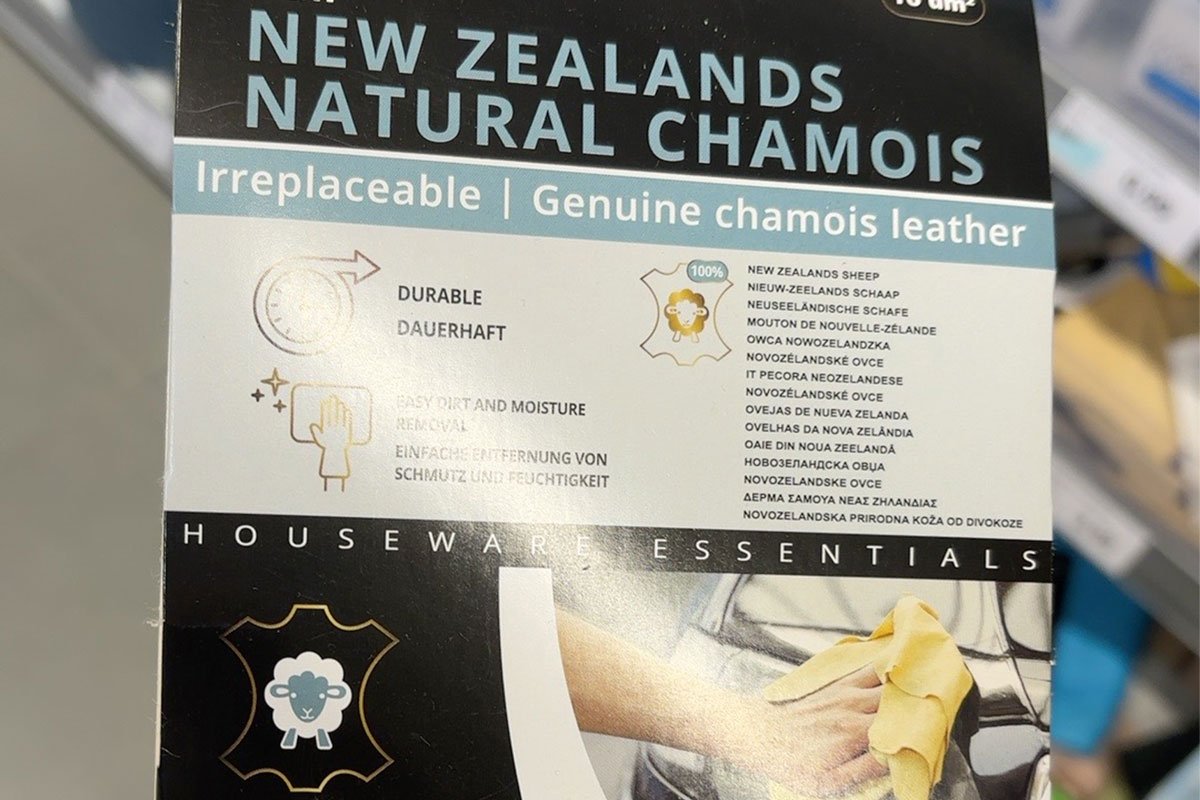
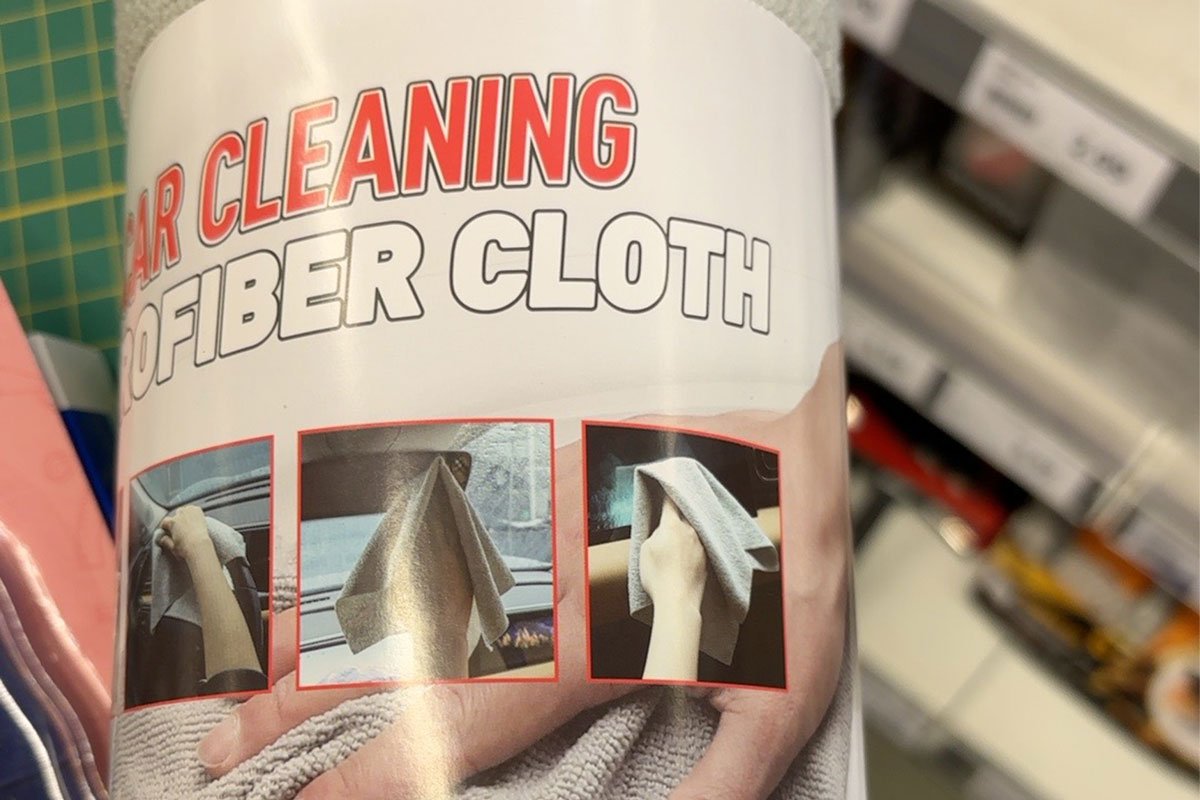
A car-cleaning microfibre looked usable but fairly plush. Then I found a genuine chamois, which felt wonderfully old-school and was promptly ruled out because I discovered natural leather isn't really what I want rubbing around inside record grooves.
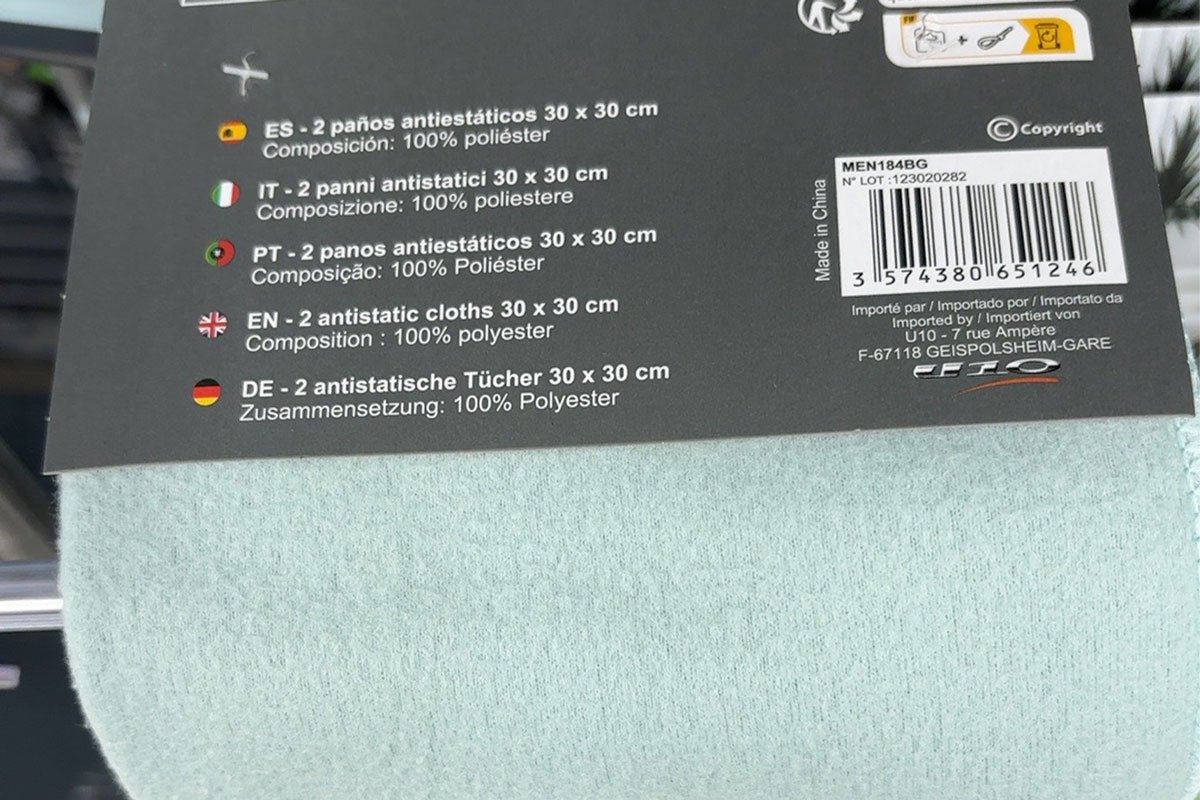
Then came an antistatic cloth. That sounded perfect for records until the same question came up again: what makes it antistatic? If a cloth has been treated with something to produce that effect, I don't necessarily want the treatment transferred to the record.
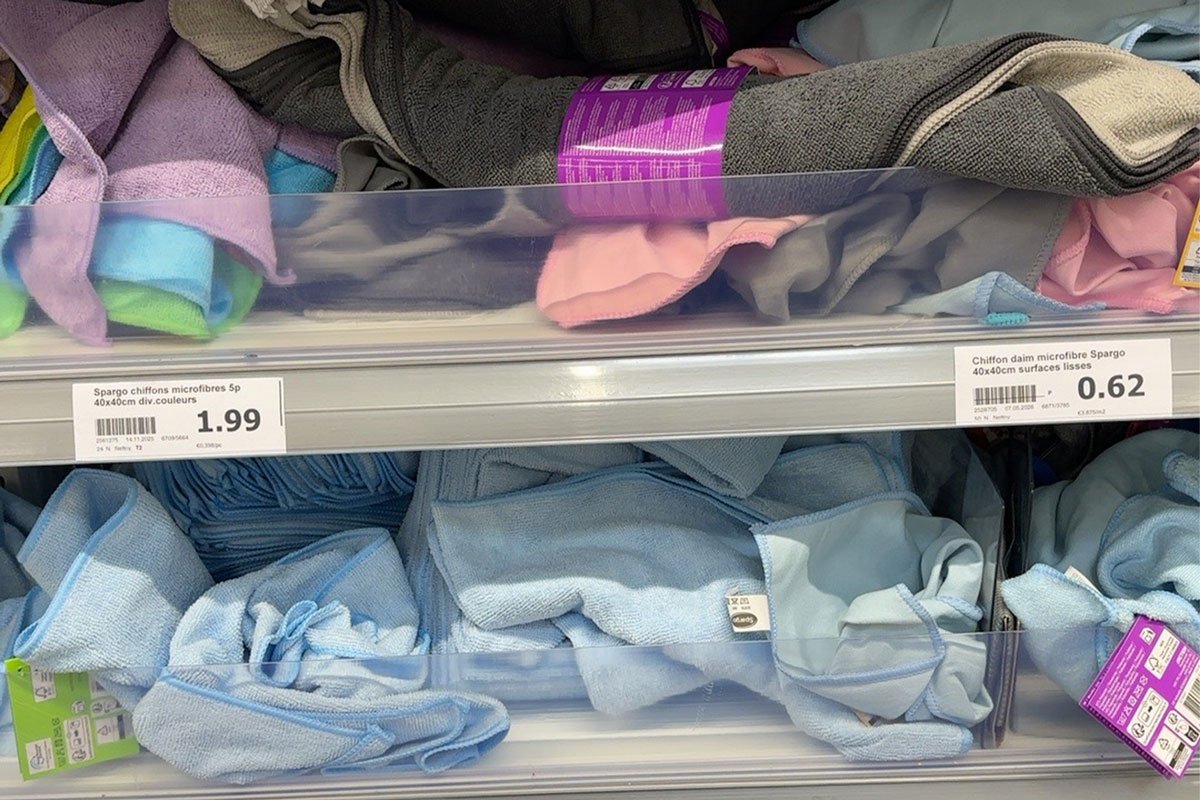
Eventually I found a cheap, suede-style microfibre with a much flatter, tighter surface. It wasn't perfect, it was labelled as having an antibacterial treatment, so it'll be thoroughly washed before it gets anywhere near a record, but for 62 cents it looked like a much better candidate for wet cleaning than the fluffy alternatives.
This is how hobbies get you.
I went shopping for food and found myself standing in a French discount shop comparing the construction of microfibre cloths.
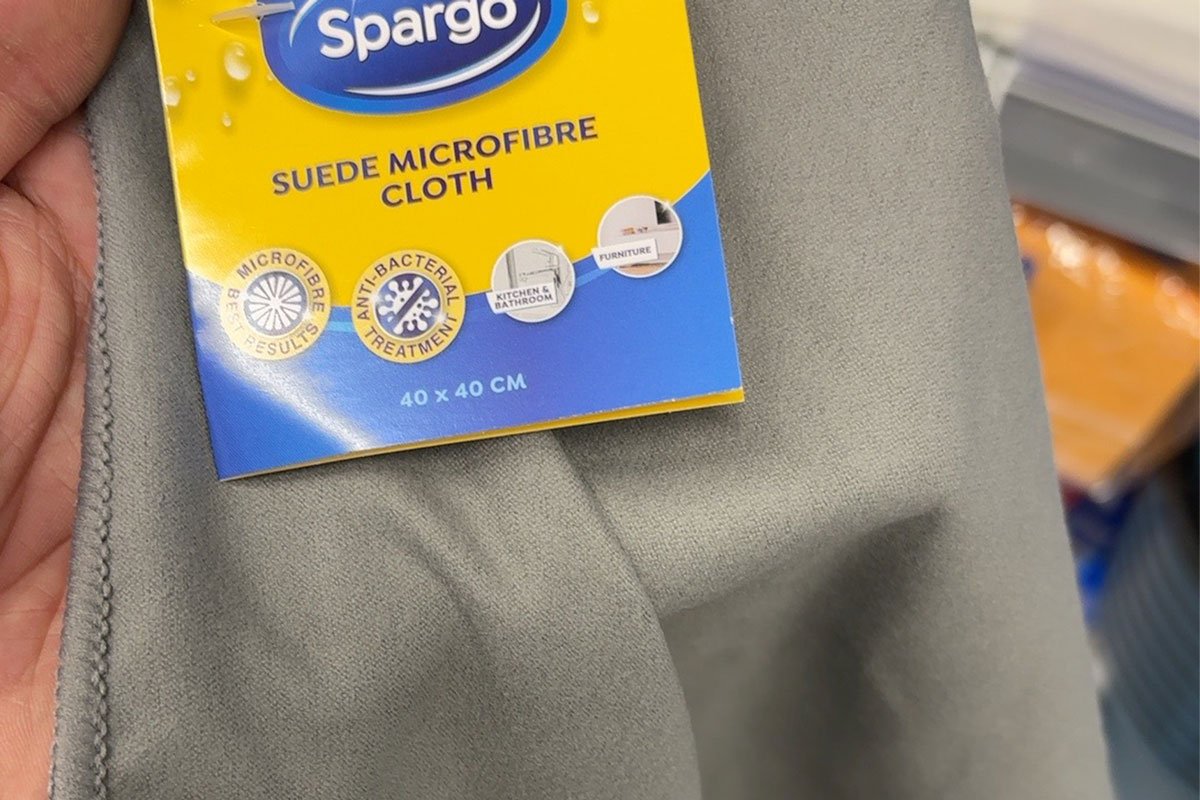
An unexpected education in microfibre
By this stage I wasn't merely looking for “a cloth”. We were considering weave, absorbency and whether apparently helpful treatments might leave something behind.
The Kodak incident
By Noz, the mission had become sufficiently established that my brain was now scanning shelves for anything vaguely related to the ingredients we'd discussed.
One of those ingredients was a photographic wetting agent, the sort of thing used in traditional photo processing to help water spread evenly rather than bead up.
So imagine my excitement when I spotted a stack of unmistakably yellow Kodak boxes.
Kodak!
Photography!
Could Noz, of all places, actually have delivered the obscure photographic chemical I was now looking for?
No.
They were Lightning earphones and car chargers.
Of course they were.
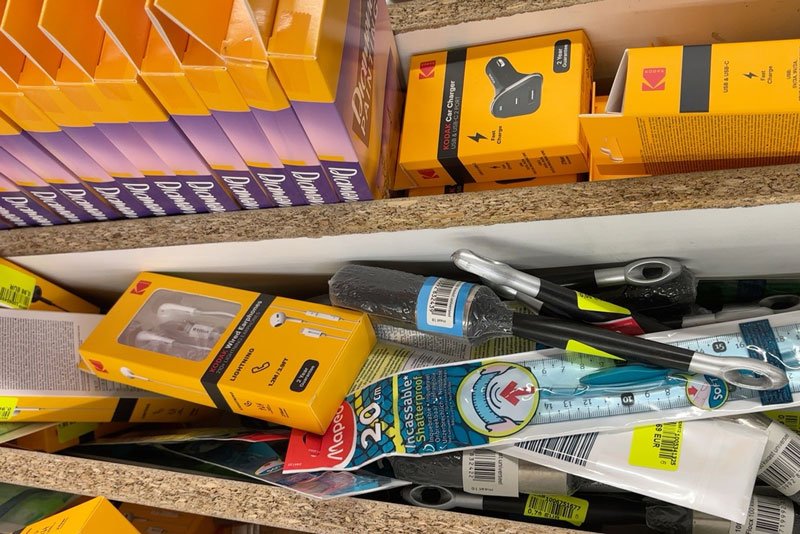
Kodak! Oh.
For several glorious seconds I thought an obscure photographic wetting agent might have appeared in Noz. It was a car charger.
The product that could destroy Discogs overnight
There was another breakthrough in Noz.
A bottle of automotive SCRATCH REMOVER.
Obviously I knew this wasn't going anywhere near a record, but for a moment I enjoyed the idea of what would happen if it worked.
A genuine vinyl scratch is physical damage to the groove. Car scratch remover works by polishing material around a surface defect; applying that logic to a record would mean polishing away part of the groove - otherwise known as the music.
Still, imagine the listing:
Was VG yesterday. Two coats of M100. NM today.
The entire Discogs grading economy collapses overnight.
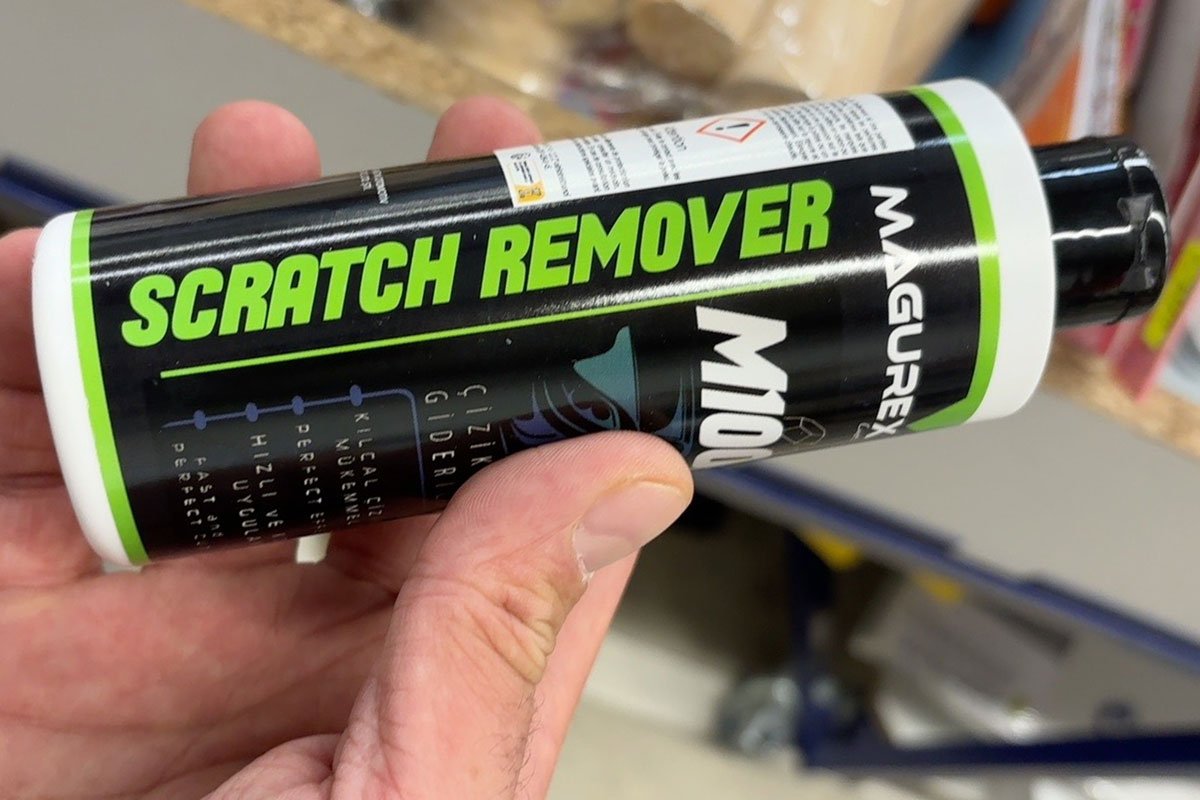
Sadly, not a VG-to-NM conversion kit
If only record scratches worked like marks in automotive clear coat. Unfortunately, polishing away the groove is a fairly significant downside.
At least I found the water
The afternoon wasn't completely unsuccessful.
I found demineralised water for €0.84 a litre, which is exactly the sort of boring purchase this whole expedition was supposed to produce. The attraction is simple: unlike ordinary tap water, it isn't carrying the same dissolved minerals that can be left behind when the water evaporates.
I also found a small spray bottle, which will eventually hold the cleaning mixture once I've settled on it.
The isopropyl alcohol remained stubbornly imaginary.
The wetting agent remained even more imaginary.
At this point, ordering both online seems considerably more sensible than spending another afternoon inspecting the solvent aisle of eastern France.
By this point I'd accidentally learned enough chemistry to discover why most of the things on the shelf were terrible ideas.
And that's probably the most useful thing I learned: don't substitute something simply because it sounds chemically adjacent. If I want plain IPA, I can buy plain IPA. I don't need to convince myself that a fragranced household cleaner containing six other things is close enough.
Meanwhile, the shopping trip escaped completely
Of course, while all this was happening, I was still wandering around shops full of random cheap things.
So I bought glue sticks for repairing outer-sleeve seams that have simply come unglued. I bought a cutting board and scalpel set because apparently I now need equipment for minor record-sleeve surgery.
Then I found two tiny easels.
These are, I maintain, entirely sensible purchases. They'll work as drying stands for records and potentially as little stands when I'm photographing sleeves for the collection.
That is my story and I'm sticking to it.
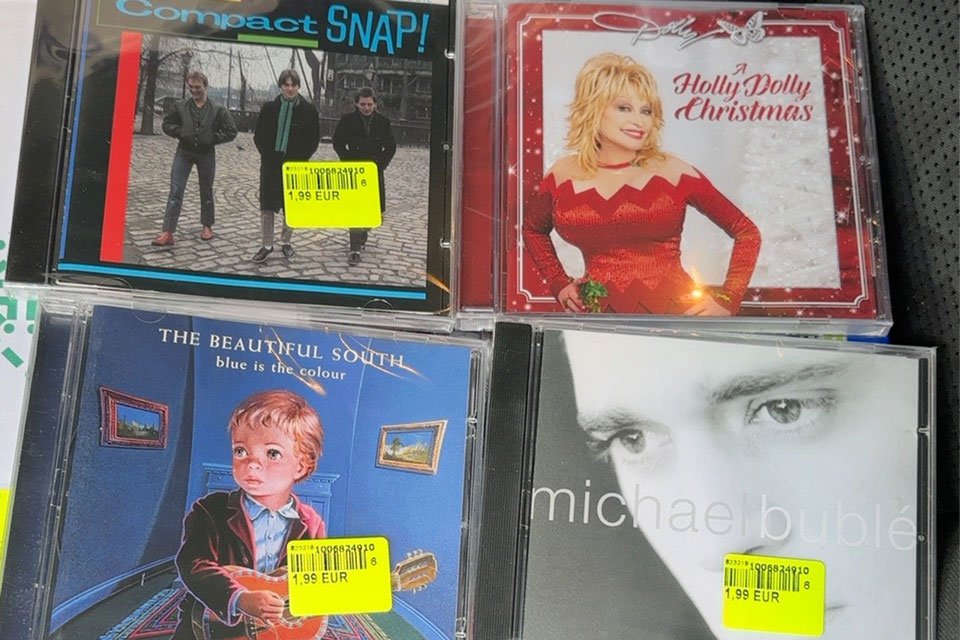
Then Noz had CDs for €1.99.
That was never going to end well.
I came home with Compact Snap! by The Jam, Blue Is the Colour by The Beautiful South, Michael Bublé's self-titled album and Dolly Parton's A Holly Dolly Christmas.
None of these cleans records.
All four seemed entirely reasonable at the time.
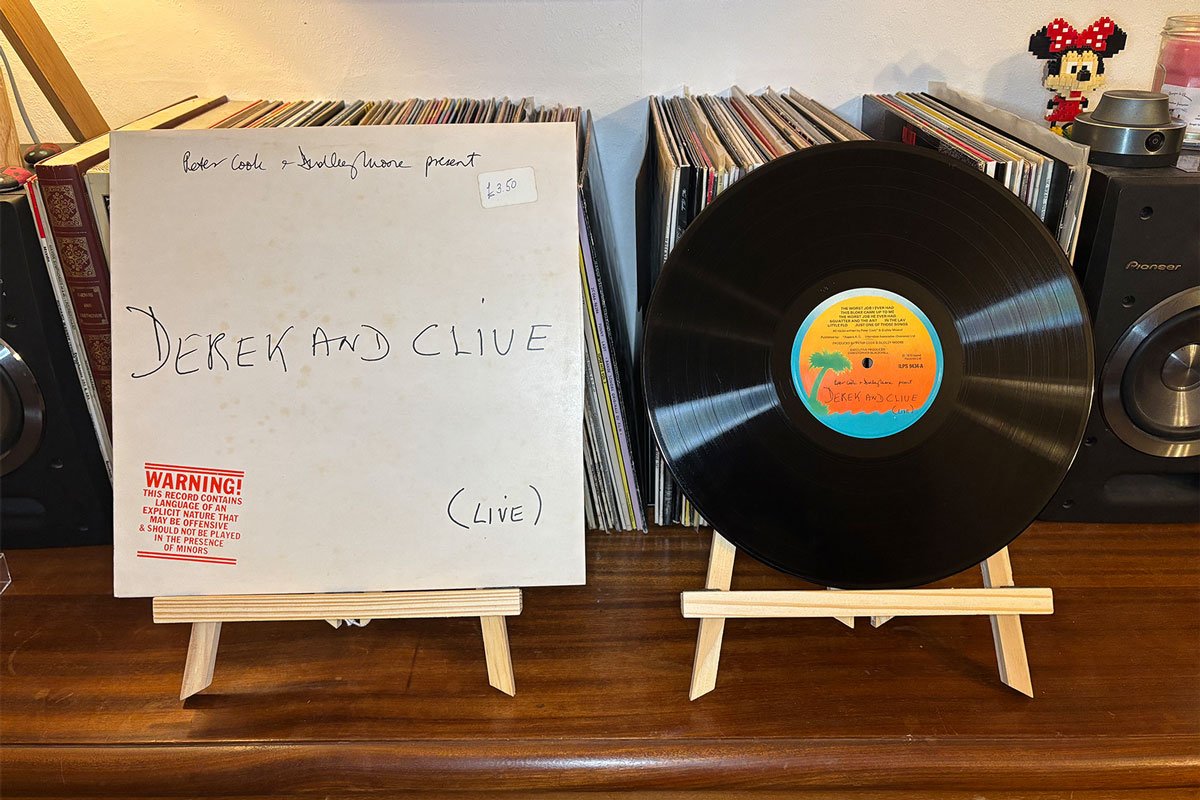
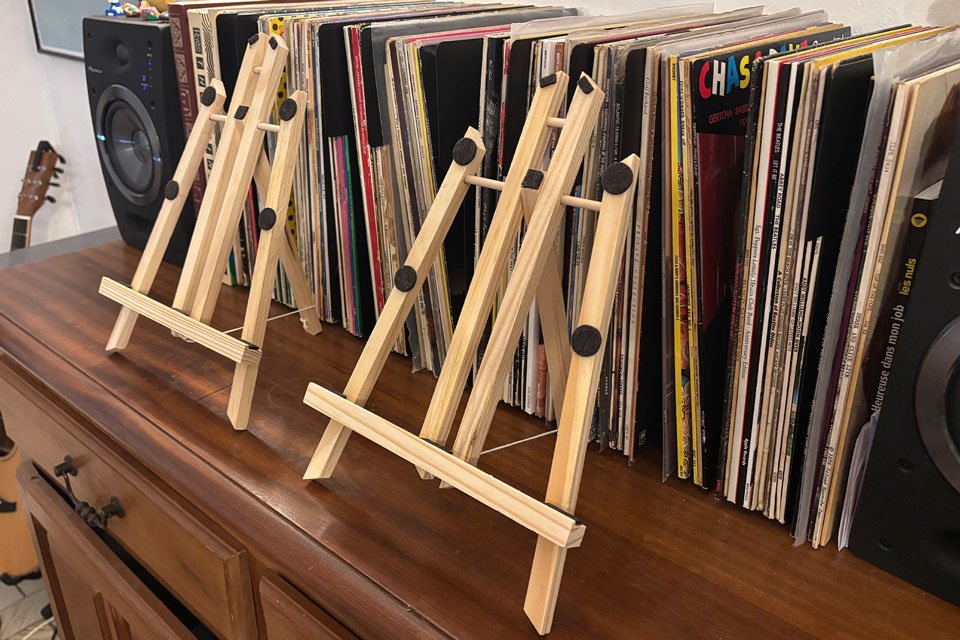
Two tiny easels, because obviously
One impulse purchase that actually worked. A few small fabric pads over the contact points stop the bare vinyl touching the wood, turning a miniature display easel into a surprisingly effective drying stand. The second photo can show the other use, holding an outer sleeve for display or photography.
The vinyl-cleaning essentials
The Jam, The Beautiful South, Michael Bublé and Dolly Parton. Not one bottle of IPA between them.
And then there was my daughter.
Noz managed to extract roughly another €50 from me in things for her, including musical toys that I was never realistically going to walk past, and by now I'd accumulated enough completely unplanned stuff that I needed the aforementioned trolley and two new bags for life.
I had gone out for groceries.
This had escalated quite significantly.
Three hours later
The whole trip was about three hours door to door.
Action: roughly 30 minutes.
Marché aux Affaires: roughly 30 minutes.
Noz: somehow an hour.
Aldi, the shop I had actually intended to visit: about 30 minutes.
And after all that, I came home with demineralised water, a spray bottle, a potentially useful microfibre cloth, glue sticks, cutting tools, two miniature easels, four CDs, groceries, presents, musical toys and two additional shopping bags.
I did not come home with isopropyl alcohol, or even a premixed bottle of vinyl cleaner I imagined would be present in the discount retail land of Eastern France.
Which means this particular rabbit hole isn't finished.
I'm going to order the proper IPA and a suitable wetting agent rather than continuing to audition bottles of household solvent. Once they arrive, I'll work out a conservative mixture, choose one of the cheap brocante records as the test subject, listen before and after, and find out whether any of this actually works.
That Journal entry can live for another day.
For now, though, the useful lesson is probably less about how to clean a record and more about how quickly collecting turns an ordinary errand into research.
I left home because we needed food.
I came back three hours later knowing what methyl ethyl ketone was.
I'm calling that progress.