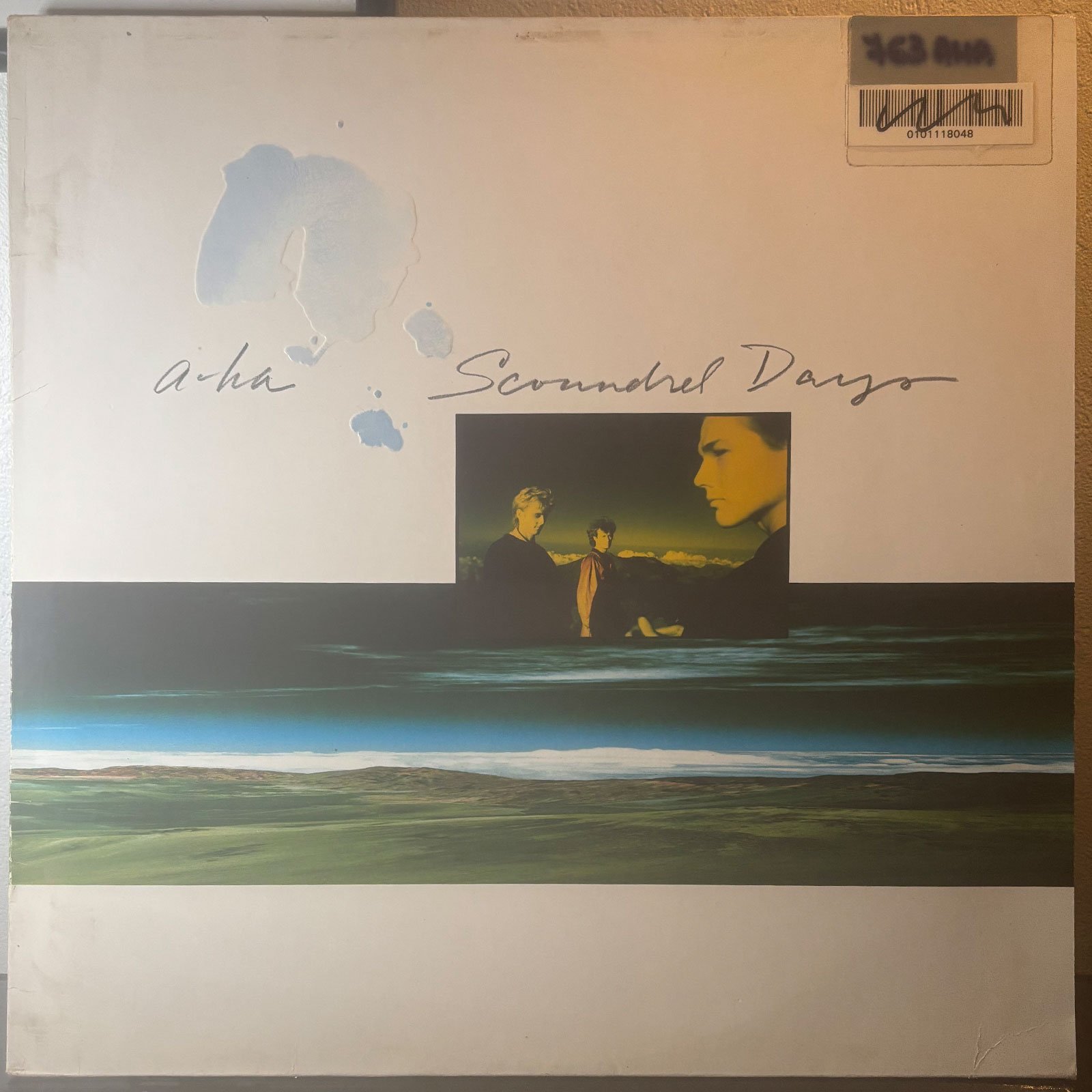
a-ha - Scoundrel Days 1986
The record that changed what I thought a-ha were
Until this record turned up, a-ha occupied a very small space in my head.
Take On Me. Obviously.
One of those songs so enormous that it almost becomes the band. The synth riff, the video, the falsetto, the pure concentrated 1980s of it all. I knew a-ha were more than one song in the abstract, but I had never owned one of their records and I had certainly never sat down with one of their albums from beginning to end.
Then Scoundrel Days arrived in one of those charity-shop hauls my wife occasionally brings home for me: anything that looks remotely English-language, recognisable or vaguely interesting gets rescued, and I work out what the hell she has found later.
This one cost us nothing.
It also turned out to be the record that dismantled my idea of a-ha within about ten minutes.
Released in October 1986, Scoundrel Days was a-ha’s second studio album, following the huge success of Hunting High and Low. a-ha’s own album history describes it as a darker move away from the purer pop of the debut, and Morten Harket has said it is the a-ha record that most closely resembles their demos — a record that asks more of the listener rather than immediately giving everything away.
That makes complete sense once the needle drops.
Darker, deeper and much stranger than I expected
The first thing that struck me was the sound.
This is not thin, shiny 80s pop preserved behind glass. The record has depth. Bass sits underneath everything with real weight, the drums have punch, keyboards appear as atmosphere rather than just decoration, guitars arrive when you least expect them, and Morten Harket’s voice seems to change character depending on what the song needs.
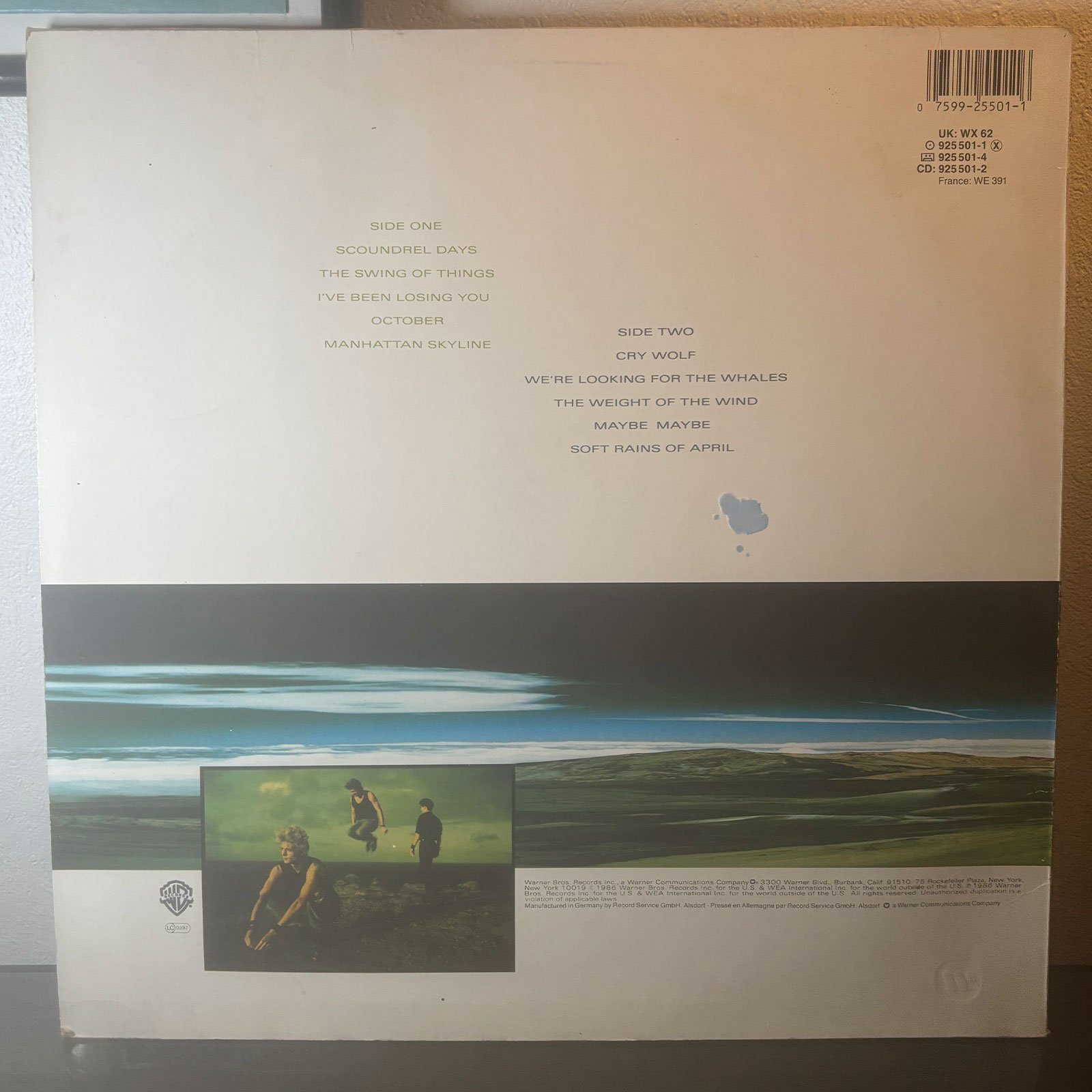
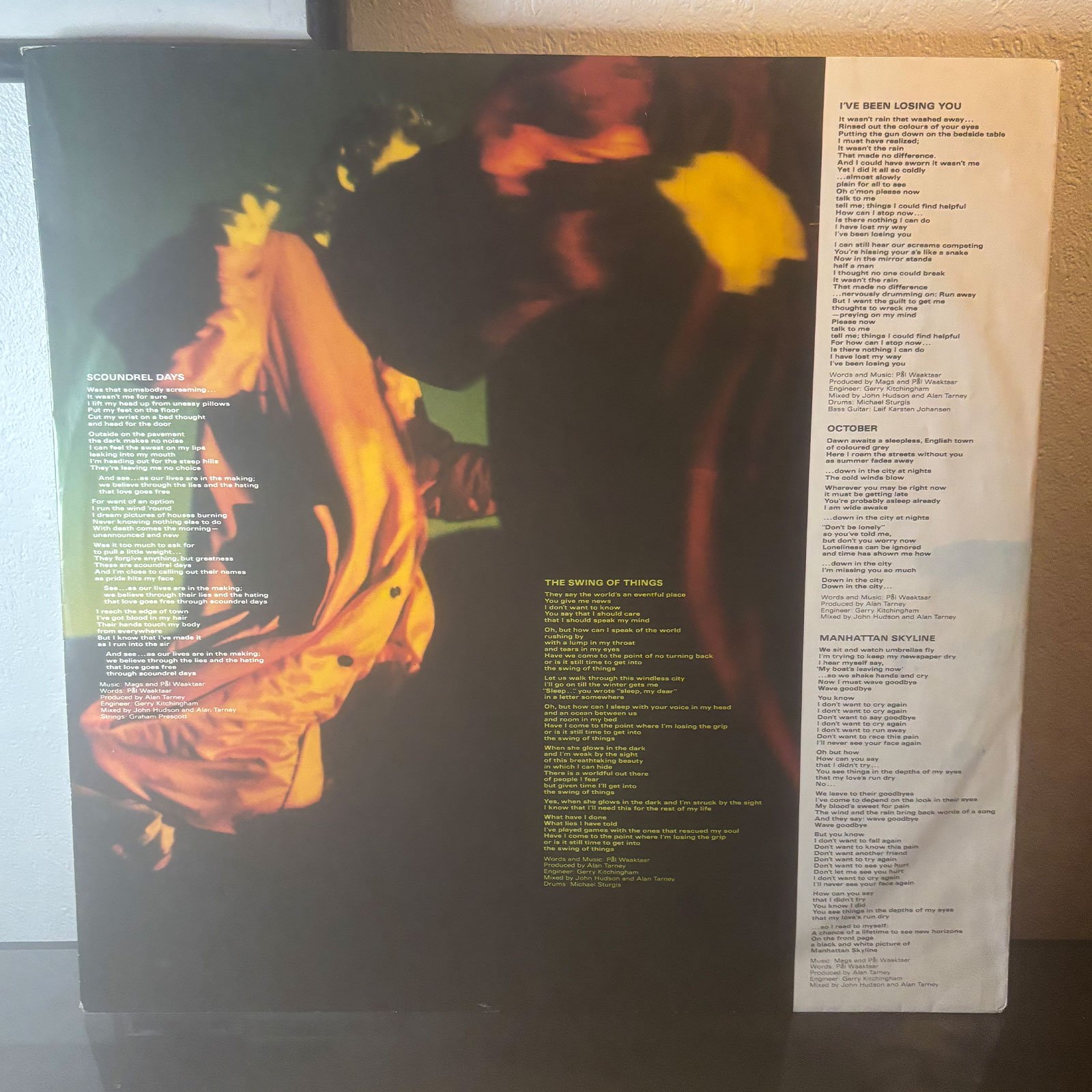
The title track opens with tension rather than celebration. It builds and broods before that voice suddenly opens out above it. Then The Swing of Things immediately shifts again, more elegant and melancholic, with synths and guitars working around each other instead of everything being built around one giant hook.
That constant movement is what surprised me most about the album. It belongs unmistakably to the 1980s, but it refuses to sit neatly inside the version of the decade I had mentally filed a-ha under.
AllMusic’s review describes the album through several overlapping styles - synth-pop, new wave and dance-rock among them - and that feels much closer to what I hear than simply calling it pop.
An album that keeps changing shape
I’ve Been Losing You pushes harder and sounds more like a band in a room, with live drums and guitars giving it considerably more muscle than I expected from a-ha.
Then there is October, which heads somewhere else again. It is sparse, cold and nocturnal, carried by bass, keyboards and a much more restrained Harket vocal. Rather than showing off the range everyone knows he has, he almost pulls the song inward. It gives the track an intimacy that is probably more effective than another enormous chorus would have been.
Manhattan Skyline may be the clearest example of why describing this record as straightforward synth-pop does it a disservice. It begins delicately, almost dreamily, before distorted guitars suddenly tear through the arrangement and completely change the emotional temperature. Classic Pop singled out exactly that contrast when revisiting the album: the track moves from chiming synth textures and soft falsetto into something far rougher and more aggressive.
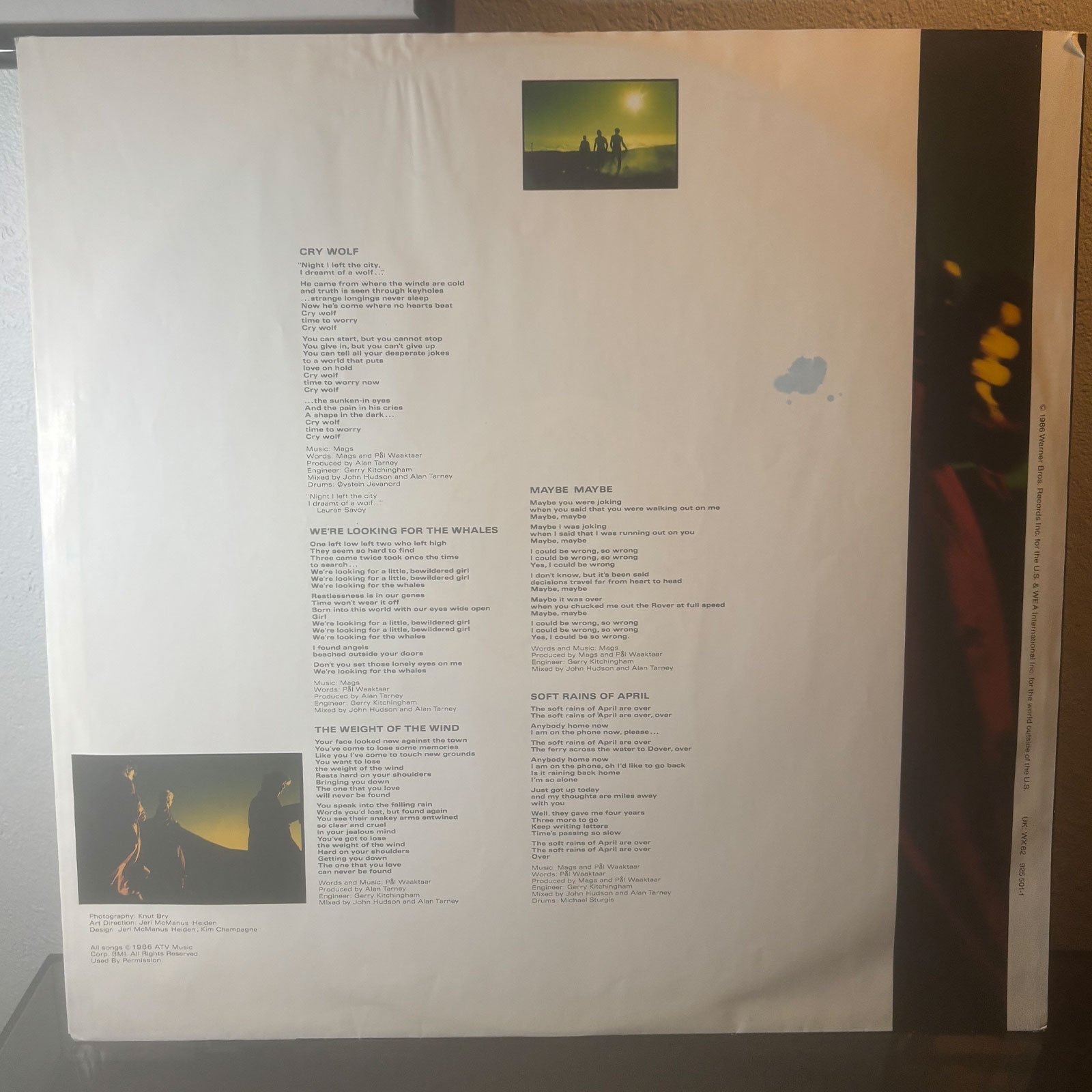
And then Cry Wolf turns the record again, built much more around rhythm and groove, with a funky synth bassline and percussive drive that feels miles away from the fragile beginning of Manhattan Skyline.
That is really the joy of Scoundrel Days for me. It sounds coherent without sounding repetitive. You are clearly still inside the same album, but the scenery keeps changing.
By the time Soft Rains of April closes the record in a wash of strings, synths and drama, the a-ha I thought I knew has more or less disappeared.
The voice is more interesting than the famous note
Of course, Morten Harket’s voice is ridiculous.
But what I had missed by knowing the band mainly through the big singles was how much control there is in it.
Yes, he can soar above a track when he wants to. But across this album he also whispers, withdraws, sounds bruised, turns almost conversational and then suddenly pushes hard enough to change the entire feel of a song. The range is impressive, but the way he uses it is more interesting than the range itself.
That probably explains why this album feels moodier than I expected. The vocals are not permanently trying to announce themselves. Sometimes they sit inside the atmosphere instead.
Apparently you used to be able to borrow a-ha from the library
Then there is the physical copy itself, because of course this record could not simply turn up and be normal.
There is a library barcode stuck to the front sleeve and a handwritten library identifier on the centre label. I have no idea which library it came from, but the evidence strongly suggests this was once a lending copy.
I still find that slightly brilliant.
At some point in the late 1980s or afterwards, somebody could apparently walk into a library, borrow an a-ha LP, take it home, put it on the turntable and bring it back again. Streaming has made access to music so completely frictionless that the idea of a library physically lending records now feels like something from another civilisation.
And looking at this copy, you would assume it had lived accordingly.
The vinyl has obvious surface marks, enough that I graded it VG visually. The sleeve is only G, largely because those library markings are part of the object now whether a collector likes them or not.
Then you play it.
And somehow it sounds NM.
No meaningful crackle. No intrusive pops. Nothing that matches what your eyes have already told you to expect. Just clean, deep, ridiculously good playback from beginning to end.
It is one of the best examples in my collection of why visual grading and playback grading need to remain separate. If I had judged this record by appearance alone, I would have completely misrepresented what it is actually like to listen to.
What is actually in the dead wax
Before getting into what the markings appear to mean, this is what is physically present on my copy.
Side A - observed on this copy
Stamped: R/S Alsdorf 925501-1A2
Hand-etched / observed: GER 1-25501-A-RE1-SH1 · Allied-style stamp/symbol · B-25153-Re1-SH1 · △14089 · 1-2
Side B - observed on this copy
Stamped: R/S Alsdorf 925501-1-B followed by a short stamper suffix that still needs rechecking directly on the record.
Hand-etched / observed: GERMANY 1-25501-B-RE1-SH2 · Allied-style stamp/symbol · B-25154-Re1-SH2 · △14089-X · 1-3
A published matrix variant is a very close match to this copy, including SH1 on Side A, SH2 on Side B, the B-25153 / B-25154 pair and △14089 / △14089-X Sheffield identifiers. A few tiny characters still need another look under strong light, so I am leaving those uncertain rather than replacing what I can physically see with a cleaner internet transcription.
The dead wax sends it across the Atlantic and back again
The pressing story makes the copy even stranger.
This is a 1986 European pressing manufactured in Germany by Record Service GmbH in Alsdorf for Warner Bros. Records, carrying catalogue number 925 501-1 with WX 62 as the UK reference. Musik-Sammler documents a close matrix variant matching the unusual combination found on this copy.
That part is straightforward enough.
The dead wax is not.
The runouts connect the German pressing to American manufacturing work associated with Allied Record Company and Sheffield Lab Matrix. The stamped Alsdorf information tells us where the finished record was pressed, while the Allied-style markings, B- numbers, SH suffixes and Sheffield delta numbers point towards US-origin metalwork in the manufacturing chain. Inter Records also documents this Alsdorf / Allied / Sheffield Lab Matrix lineage for the release.
So this apparently ordinary European a-ha LP has a physical production history that crosses the Atlantic before the finished vinyl is pressed in Germany.
That is exactly the sort of thing I had never thought about before I started reading dead wax. A record is not just an album title and a catalogue number. It is the end result of recordings, mastering decisions, lacquer cuts, metalwork, stampers, factories and occasionally a manufacturing trail that makes very little sense until you start looking at the tiny scratched and stamped characters nobody was really expecting you to care about forty years later.
A few tiny characters on this copy still need another look under strong light, so I am deliberately leaving those uncertain rather than replacing what I can physically see with a cleaner transcription from the internet.
More than the hit, more than the barcode
There is something about this particular copy that sums up why I am enjoying collecting records so much.
Popular memory has a habit of simplifying things. In my head, a-ha had gradually become Take On Me. One enormous song and one enormous video standing in for an entire band.
The library did something different but oddly similar to this physical record. It became an accession number, a barcode and something to be lent out, returned and eventually removed from circulation.
Then time did the rest. The record became old stock, ended up in a charity shop and was eventually picked up for nothing because my wife recognised the name.
Putting the needle down reverses some of that simplification.
The band becomes more than the hit. The album becomes dark, complicated, melodic, strange and considerably better than I had any reason to expect. The battered library copy stops being an obsolete object and becomes an astonishingly good-sounding record again. And the apparently meaningless scratches in the dead wax turn into a manufacturing journey from American metalwork to a German pressing plant and, decades later, into my collection.
I bought none of that deliberately.
Which might be the best bit.
Want to see more?
Simon Morgan says:
what a banging record this is